
The Dragon’s Place in a Managed World
Fantastic Beasts and Where to Find ThemThis flow follows the effort to understand, classify, protect, and contain the most famous and difficult magical beasts.
increasing Bearing strength in each event
 decreasing
Bearing strength in each eventdecreasingFame and Concealment
Fame and Concealment
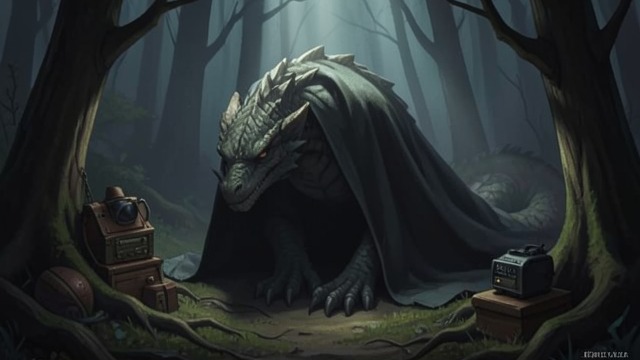
A creature difficult to hide
Dragons are among the most famous magical beasts and among the hardest to conceal. Their size and power make their presence difficult to reconcile with secrecy.
Expertise required
Neither sex should be approached except by highly skilled and trained wizards, and the female is generally larger and more aggressive. The entry begins by making human limits central to understanding the animal.
The Dragon embodies the scale of the management problem. Its fame draws attention, while its power means that careless contact can have grave consequences.
A Diversity of Breeds
A Diversity of Breeds
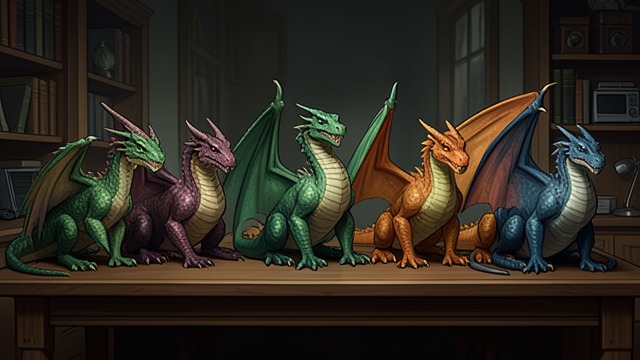
More than one kind
The guide records ten pure-bred Dragons, from the medium-sized Antipodean Opaleye to the immense Ukrainian Ironbelly. Their habitats, temperaments, colours, and prey differ.
Local knowledge matters
The Welsh Green prefers sheep and avoids humans unless provoked, while the Chinese Fireball is more aggressive and favours pigs and humans. No single description can stand in for the whole group.
The breed list makes management dependent on accurate identification. Treating every Dragon alike risks ignoring the different needs and dangers of particular populations.
The Cost of Dragon Materials
The Cost of Dragon Materials
Valuable parts
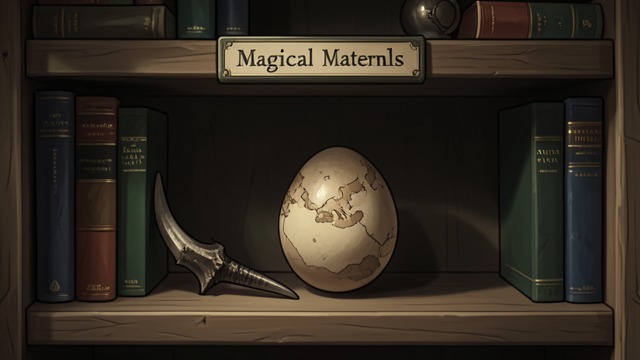
Dragon hide, blood, heart, liver, and horn possess magical properties, creating persistent demand for the animals and their products. Eggs are defined as non-tradeable.
Numbers under pressure
The Romanian Longhorn’s population has fallen partly because of trade in its horns. The reservation’s breeding programme responds to that pressure with deliberate population management.
The catalogue links magical utility to conservation risk. Human benefit can encourage close study, but unchecked extraction may undermine the survival of the creature itself.
A Reservation and Its Boundaries
A Reservation and Its Boundaries
Protected territory
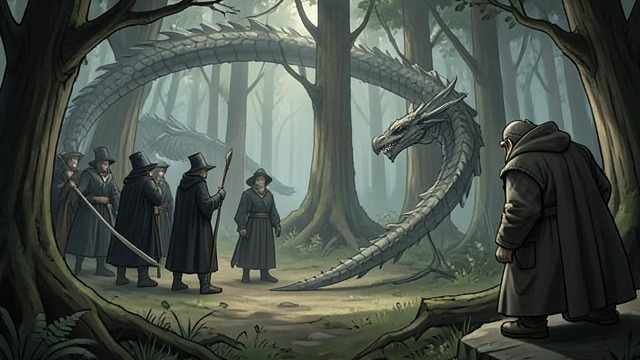
Dragon reservations allow wizards to study the animals and reduce contact with Muggles. Some populations require close supervision because they may seek prey beyond the designated area.
Control remains incomplete
Protective measures cannot make Dragons harmless or perfectly contained. A creature’s own power may also cancel charms intended to keep people away.
The reservation is a compromise between access, protection, and safety. It manages risk without pretending that human borders can fully control a powerful animal.
Ilfracombe as a Warning
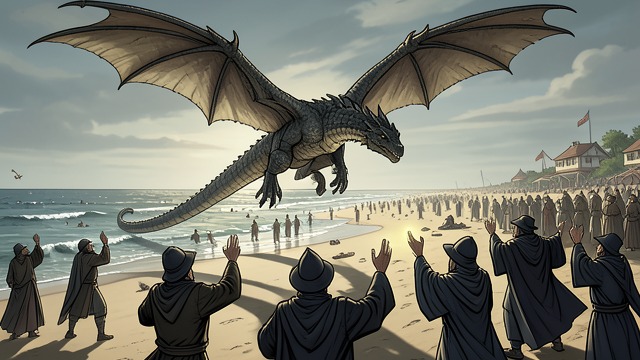
Ilfracombe as a Warning
A breach reaches the beach
A rogue Common Welsh Green Dragon descends over a crowded beach at Ilfracombe. Its appearance exposes the consequences of failed containment in a place full of Muggle witnesses.
Community-wide repair
A wizarding family performs a mass Memory Charm, avoiding fatalities and limiting exposure. The event becomes a reminder that even a relatively less troublesome breed can create a crisis.
The incident confirms why reservations and supervision matter. Management is not an assertion that Dragons can be made tame; it is an effort to reduce the harm when they escape human plans.
when the Dragon introduction begins
during the catalogue of the ten dragon breeds
when dragon products are described
when dragon reservations are discussed
1932
